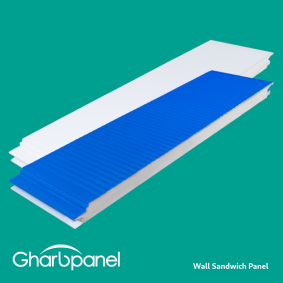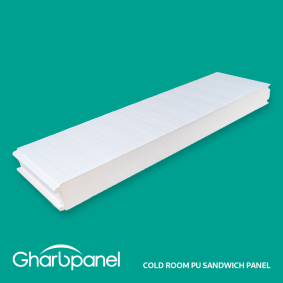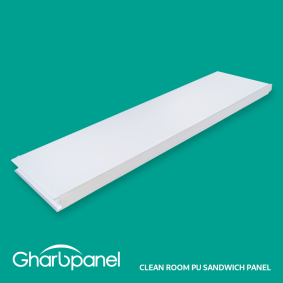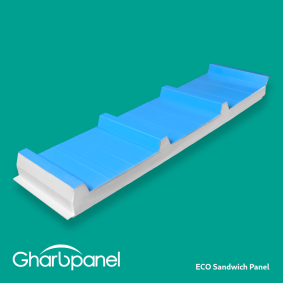


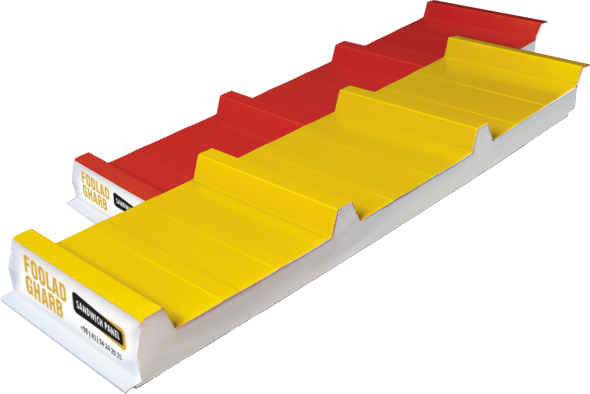
The GharbPanel roof sandwich panel is manufactured and supplied for various specialized applications. It is produced with pre-painted, galvanized, or Aluzinc sheets, fully customized in terms of color and thickness. Polyurethane sandwich panels are among the new products of West Panel, and thanks to their unique functional properties, they have gained strong popularity across industries and factories.
GharbPanel roof sandwich panels are produced in compliance with international standards. If you are looking for competitive pricing and high-quality roof sandwich panels, contact our technical and sales experts to place your order. Your product will be delivered on time to your desired location anywhere in the country.
Technical Specifications
| Specification | Value |
|---|---|
| Width | 100 cm |
| Lenght | 2 - 13 m |
| Insulation thickness | 2, 3, 4, 5, 6, 8, 10 cm |
| Sheet thickness | 0.35 - 0.80 mm |
| Sheet type | Galvanized, Colored, Aluzinc, Stainless Steel |
| Insulation | PU 40 kg/m3 |
| Production | Continuous |
| Fireproof | Yes |

Polyurethane (PU) Sandwich Panel
Polyurethane (PU) is a type of insulating foam that can be used as both thermal and acoustic insulation. It is produced by combining polyol and isocyanate under specific conditions in the presence of a catalyst, offering superior advantages compared to polystyrene. Sandwich panels made with polyurethane insulation can withstand temperatures of up to 100–110°C.
PU sandwich panels are manufactured in thicknesses ranging from 2 to 25 cm, depending on customer requirements. Each panel consists of only three layers: two thin outer metal sheets and one thick inner layer of polyurethane foam insulation. The density of the polyurethane foam is approximately 38–42 kg/m³.
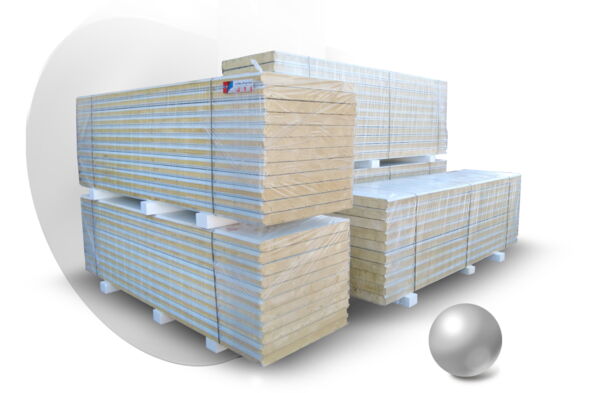
Features of Gharb Panel Roof Sandwich Panels
-

Thermal Insulation -

Durability -

Waterproof -

Fire resistant -

Sound insulation -

Quick and easy installation
Choosing Polyurethane Roof Sandwich Panels
Selecting roof sandwich panels with polyurethane insulation is one of the best decisions for construction projects. Thanks to its unique properties—such as excellent thermal and acoustic insulation, high resistance to moisture, and lightweight structure—polyurethane is an ideal choice for both industrial and residential roofs. This type of insulation helps reduce energy consumption while delivering outstanding performance against harsh weather conditions and temperature fluctuations. In addition, the high durability and corrosion resistance of these panels make them an economical and efficient solution for a wide range of projects.

Pricing of Gharb Panel Roof Sandwich Panels
The price of roof sandwich panels depends on many factors, and an approximate price cannot be provided without proper calculations. Pricing should be determined by a sales expert based on the requested specifications. These factors include:
- Profile Type: Roof profile.
- Sheet Material: The top and bottom sheets can be galvanized, Aluzinc, or aluminum. To reduce costs, the bottom sheet can also be selected as water-resistant foil paper.
- Sheet Thickness: Increasing the sheet thickness raises both the weight and the price of the sandwich panel. Usually, the bottom sheet is chosen thinner than the top sheet.
- Sheet Color: The bottom sheet, which forms the interior ceiling, is generally white, while colored roofs often use blue, red, or orange sheets.
- Insulation Thickness: Thicker insulation enhances thermal resistance against cold and heat and significantly affects the price.
- Insulation Density: The density is selected based on the intended application.
- Panel Width: The width of the sandwich panel is generally fixed according to the profile type, although narrower panels can be produced under certain conditions.
Additionally, the total coverage of roof sandwich panels will be slightly more than the structure’s dimensions due to panel overlaps.
Roof Sandwich Panel invoice
Call for Advice
+98 912 017 1242Gharb Panel’s Commitment to Customer Satisfaction
GharbPanel has always placed customer satisfaction at the core of its mission. Throughout all years of operation, our customers’ satisfaction has been our most valuable asset and the guarantee for our continued growth and activity. To ensure the highest product quality, we continuously invest in new production lines and employ skilled, educated technical experts. We carefully manage every stage of production, quality control, proper packaging, and delivery to ensure that the panels you receive meet your exact specifications.
The process of purchasing sandwich panels—from the initial order to final delivery—can be time-consuming. GharbPanel has streamlined this process using advanced production and sales management systems along with trained personnel to reduce lead times. For more information, pricing of sandwich panels, or any technical inquiries, please contact us at 0416206.
Roof Sandwich Panels
Roof sandwich panels are an excellent choice for commercial and residential buildings, offering easy installation and effective insulation. Each panel consists of three main layers: two metal sheets and a thick insulation layer, providing high strength while remaining lightweight. The core insulation can be made from polyurethane or other insulating materials. Currently, polyurethane sandwich panels are more popular than other insulation types, and the economical version offers a cost-effective alternative to traditional corrugated roof sheets. The metal sheets in roof sandwich panels can be pre-painted, galvanized, Aluzinc, Galvalume, aluminum, or water-resistant foil paper.
Roof sandwich panels are manufactured for diverse applications, including warehouses, workshops, industrial halls, livestock farms, cold storage facilities, and residential homes. The main difference between roof and wall sandwich panels lies in the profile of the top sheet: roof panels feature ridges that allow them to bear additional loads. Panel lengths are generally limited to 15 meters. Insulation thickness can be selected based on the intended application—such as cold storage, poultry farms, sports halls, warehouses, or industrial halls—ranging from 2 to 25 cm.